Neon Key Locksmith Service Team
Local locksmith team
Apr 9, 2026 12 min read

Opening a new business on the Strip corridor, in a Summerlin office park, or along a busy Downtown Las Vegas block is exciting — and complicated. Between your lease, your signage permits, and your POS system, it is easy to let physical security slide to the bottom of the list. That is a mistake most new Vegas business owners only make once. The locks on your front door, your back stockroom, and your server closet are the first and last line of defense against break-ins, employee theft, and liability claims.
This checklist is built for storefront owners, office managers, and commercial tenants who are getting ready to open their doors in the Las Vegas area. We will walk you through the hardware you actually need — mortise locks, panic hardware, master key systems, and more — along with the local code requirements that can trip you up before your first customer ever walks in. Whether you are outfitting a restaurant near Fremont Street or a medical office in Henderson, these are the decisions every new business should sort before opening day.
## Why Commercial Locksmith Needs Are Different From Residential Ones
Most new business owners assume that upgrading a lock means swapping out a door knob lock for a beefier deadbolt — the same logic they would apply at home. Commercial security does not work that way. A high-traffic retail door takes thousands of open-and-close cycles a year. A standard residential lockset will wear out fast and may void your insurance coverage if a break-in occurs. Commercial-grade hardware is rated by the American National Standards Institute (ANSI) on a Grade 1 through 3 scale, and most Nevada commercial occupancies require Grade 1 hardware on exterior doors. Your commercial locksmith service should verify that rating before any hardware is quoted or installed.
There is also the question of key control. At home, you hand a spare key to a neighbor. In a business, you may have a manager, a cleaning crew, a weekend supervisor, and a maintenance contractor — all needing different levels of access. Without a master key system or a restricted keyway, you have no reliable way to know who has a copy of your key or where it has been duplicated. Getting this architecture right from day one is far easier and less disruptive than redesigning it after you have already hired a full staff.
## The Mortise Lock: The Workhorse of Commercial Door Security
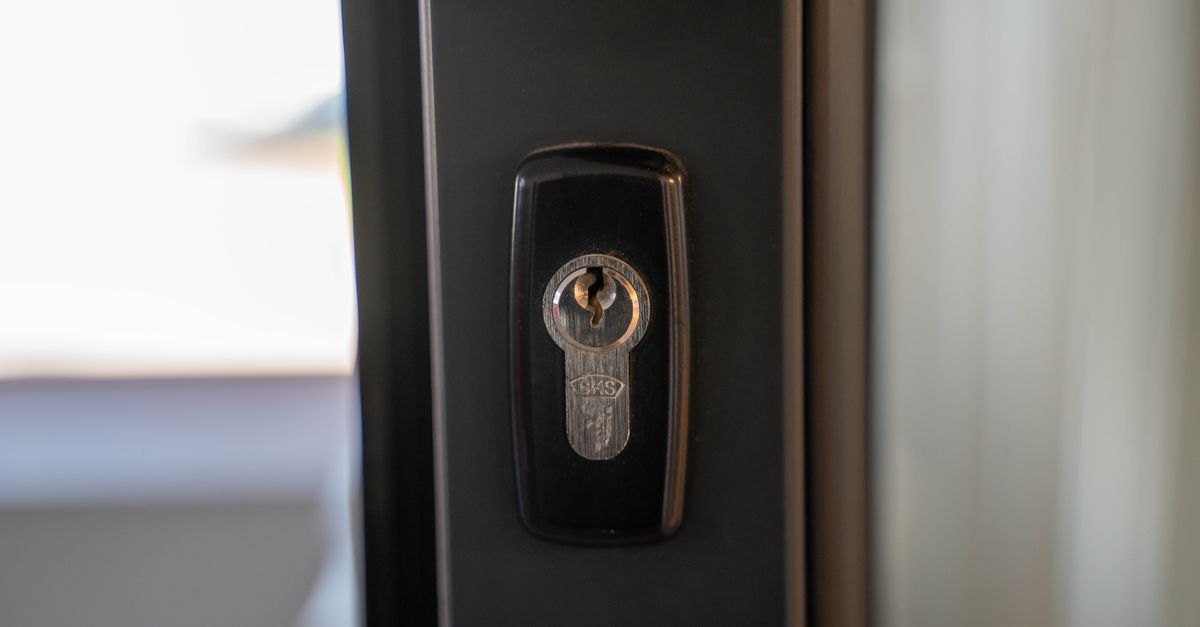
If there is one piece of hardware that separates serious commercial security from a patchwork of residential parts, it is the mortise lock. Unlike a cylindrical lockset — the kind with a round knob or lever that punches through the door face — a mortise lock is a self-contained unit that fits inside a deep rectangular pocket cut into the door's edge. That housing contains the latch, the deadbolt, and sometimes a separate privacy or indicator function, all in one steel body. Because the lock body is recessed rather than surface-mounted, it is dramatically harder to attack with a kick or a pry bar. For a Las Vegas commercial locksmith, installing and servicing mortise locks is one of the most common and most important jobs on any new-business checklist.
Mortise locks pair naturally with a restricted keyway system, which means keys can only be duplicated by an authorized locksmith — not at a hardware kiosk. They also accommodate high-security cylinders from manufacturers like Medeco or Mul-T-Lock if your inventory or client data demands that level of protection. When our team visits a new business to assess their doors, the first question we ask about any entrance that sees daily staff or vendor traffic is: does this door have a mortise lock, or are we working around a residential-grade cylindrical set? The answer shapes every other recommendation on the list.
## Panic Hardware, ADA Compliance, and Nevada Code Requirements
Nevada follows the International Building Code (IBC), and Clark County enforces it closely. For most commercial occupancies with an occupant load above 49 people — think a mid-size restaurant, a retail shop, or a fitness studio — exit doors are required to have panic hardware (also called crash bars or exit devices). These are the horizontal bars that unlatch a door when pushed from the inside, allowing rapid egress without turning a knob or key. Failing to install them where required is a code violation that can delay your certificate of occupancy and expose you to serious liability. A qualified commercial locksmith will identify which of your doors trigger that requirement during an initial site walk.
ADA compliance adds another layer. Door hardware must be operable with a closed fist — no pinching, twisting, or tight grasping required — which rules out round knobs on accessible routes. Lever handles are the standard solution, but the lever must meet specific force requirements and mounting heights as well. If you are converting an older Las Vegas space — say, a former retail unit on Maryland Parkway or a ground-floor suite in a mid-century Downtown building — existing hardware may need to be replaced entirely to bring the property up to current standards before your occupancy permit is issued. Do not wait for a city inspector to flag it; a pre-opening security audit from an experienced commercial locksmith service will catch these issues first.
## Master Key Systems, Rekeying, and Key Control Before You Open
One of the highest-value things you can do before handing out a single key is to design a master key system. A well-structured system gives your head manager one key that opens every lock in the building, your shift supervisors keys that open common areas but not the safe room, and individual employees keys that open only their workstation or locker. All of this runs off a single, controlled keyway. When someone quits or loses a key, you do not have to rekey every lock in the building — only the specific cylinder that key accessed. That kind of granular control saves real money and real headaches over time. If you are taking over a previously occupied space, a full rekey is non-negotiable. You have no way to know how many copies of the old keys exist or where they are.
Our team handles master key planning, cylinder rekeying, and full lock replacement across the Las Vegas Valley — from commercial corridors in the Arts District to office campuses in Summerlin and warehouse units near the North Las Vegas industrial zone. If you are mid-lease and realize your access control is a mess, that is exactly the kind of situation where an emergency commercial locksmith call makes sense. We can assess your current hardware, recommend the right cylinder configuration, and rekey or replace locks the same day so you are not leaving your business exposed overnight. Call (702) 760-4218 — we answer every hour of every day, including holidays.
## Your Pre-Opening Commercial Security Checklist: 25 Things to Confirm
This is the practical heart of the checklist. Work through each item with your commercial locksmith before you turn on the open sign. First, confirm all exterior door locks are ANSI Grade 1 rated. Second, verify that high-traffic entrance doors have a mortise lock installed and properly aligned. Third, check that all lock cylinders are rekeyed from the previous tenant's keys. Fourth, design and document your master key hierarchy before issuing any keys to staff. Fifth, install restricted-keyway cylinders to prevent unauthorized key duplication. Sixth, identify all doors that require panic hardware under IBC and Clark County codes. Seventh, ensure panic devices are tested and properly aligned — a misaligned strike plate will cause nuisance alarms and wear. Eighth, confirm all ADA-accessible routes use lever hardware meeting force and height requirements. Ninth, audit all door closers — a door that does not close and latch on its own is a security gap. Tenth, check that all door frames are reinforced with commercial-grade strike plates using three-inch screws, not the short residential screws that come in the box.
Eleventh, evaluate your back door and loading dock separately — these are the most commonly overlooked entry points. Twelfth, assess whether your server room, safe, or file storage area needs a standalone high-security mortise lock or electronic access control. Thirteenth, decide whether a keypad or card-access system is appropriate for any interior zones. Fourteenth, verify that all glass doors have a multi-point locking system, not just a single latch at the center. Fifteenth, check that sliding doors have both a floor bolt and a secondary lock to prevent lifting off the track. Sixteenth, inspect all window locks on ground-floor and accessible windows. Seventeenth, confirm that your safe is bolted to the floor or wall and that the combination has been changed from the factory default. Eighteenth, plan your key log — a written or digital record of every key issued, to whom, and on what date. Nineteenth, identify who holds emergency after-hours access and how they will contact a locksmith if needed. Twentieth, make sure your signage does not inadvertently advertise your alarm system brand to potential intruders. Twenty-first, test every lock under load — try to force or rattle each door with reasonable pressure to find weak points before an intruder does. Twenty-second, confirm that your interior office doors have door knob lock or lever sets appropriate for their privacy needs. Twenty-third, plan a rekey schedule — many businesses rekey annually or after any staffing change. Twenty-fourth, discuss with your locksmith whether a key-control audit trail (logged electronic access) is worth the upgrade cost for your occupancy type. Twenty-fifth, save your locksmith's number — (702) 760-4218 — in your phone now, before you are standing outside at 2 a.m. with a broken key in the cylinder.
## What Affects the Cost of Commercial Locksmith Services in Las Vegas?
One of the most common questions new business owners ask is: how much does a locksmith cost in Las Vegas? There is no single answer, and any company that quotes a flat price before seeing your doors is guessing. The factors that shape the final price include the type and grade of hardware involved, the number of cylinders being rekeyed or replaced, whether panic hardware or mortise lock installation requires door modification, the time of day the work is needed, and the travel distance to your location across the Las Vegas Valley. An after-hours emergency commercial locksmith call will carry a different rate structure than a scheduled daytime installation — that is industry-standard and reflects the real cost of around-the-clock availability. What a locksmith call out fee should never be is a surprise. At Neon Key Locksmith, we confirm an exact, up-front price before any work begins, so there are no unexpected charges when the job is done.
Another question that comes up: what is a locksmith call out fee? It is the service charge for dispatching a technician to your location, separate from the cost of parts or labor on the job itself. The call out fee will vary based on distance and time of day. The right answer to who is the cheapest locksmith is not the right question for a new business owner to be asking. The right question is: which locksmith will make sure my hardware is code-compliant, correctly installed, and backed by someone I can call back if something goes wrong? That is the standard we hold ourselves to at Neon Key Locksmith, and it is the standard you should expect from any professional commercial locksmith service you hire.
Frequently asked questions
What is the difference between a mortise lock and a standard cylindrical lockset for my Las Vegas storefront?+
A mortise lock fits inside a deep pocket cut into the door edge, housing the latch, deadbolt, and sometimes additional functions in one steel body. Because it is recessed rather than surface-mounted, it resists kick-in and pry attacks far better than a cylindrical lockset, which attaches through the door face. For most commercial storefronts and office entrances in Las Vegas, a mortise lock is the correct choice for exterior doors — it is more durable, more secure, and easier to integrate with a restricted master key system. A cylindrical door knob lock or lever set may still be appropriate for lower-risk interior doors within the same building.
Do I need panic hardware on my Las Vegas business doors, and who checks for compliance?+
Under the International Building Code as adopted in Nevada, panic hardware is required on exit doors serving occupancies with an occupant load of 50 or more. Clark County building inspectors check for this as part of your certificate of occupancy process, so a violation can delay your opening. Even if your occupant load falls just under the threshold, panic hardware is worth considering on busy exit corridors for employee safety and liability reasons. A commercial locksmith with experience in Las Vegas commercial spaces can walk your site before you apply for occupancy and flag any doors that need attention.
How much does a locksmith cost in Las Vegas for a full commercial rekey?+
The final cost depends on several factors: the number of locks being rekeyed, the type of cylinders involved (standard, high-security, or restricted keyway), whether any hardware needs to be replaced rather than rekeyed, and the time of day the service is scheduled. At Neon Key Locksmith, we assess your property and confirm an exact price before any work begins — there are no surprise charges at the end of the job. For new businesses, we also recommend discussing a master key system at the same time as a rekey, since combining both services during a single visit is more efficient than scheduling them separately.
What should I do if I am locked out of my Las Vegas business after hours?+
First, check whether another entrance is accessible and whether a key-holding employee is reachable. Do not attempt to force or bypass the lock yourself — you risk damaging the door, the frame, or the lock cylinder, which can turn a simple lockout into an expensive repair. If no legitimate access point is available, call a professional emergency commercial locksmith. Neon Key Locksmith is a 24/7 mobile service covering the entire Las Vegas area, including Henderson, Summerlin, North Las Vegas, and Downtown. We will verify your identity and ownership before performing any work, and we will confirm the service price before we begin. Call (702) 760-4218 any time — day or night.